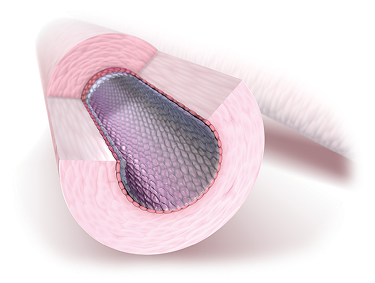
What is PAH?

PAH Is a Rare, Serious, and Progressive Disease1

  • PAH results from restricted flow through the pulmonary arteries, leading to increased pulmonary vascular resistance (PVR)2
  • Increased PVR leads to a decline in RV function and eventual RV failure2

Hemodynamic definitions of PH and PAH1

The definitions are based on hemodynamic assessment by an RHC

PH

mPAP >20 mmHg

PAH

mPAP >20 mmHg PAWP ≤15 mmHg PVR >2 WU

PAH symptoms may present like other lung conditions3,4

  • While a majority of patients present with dyspnea on exertion, it is important to distinguish PAH from other cardiac or pulmonary etiologies such as asthma or COPD

Increased PVR is caused by narrowing of the pulmonary arteries2

Increased PVR leads to a decline in RV function and eventual RV failure.2

Hemodynamic changes correlate with increasing severity of PAH5

Peak cardiac output

Resting cardiac output

Resting PAP

PVR

Mobile Table

Time

Peak cardiac output

Resting cardiac output

Resting PAP

PVR

Symptoms of PAH

Normal PVR:
≤2 Wood units.1

Elevated PVR:
>2 Wood units.1

Adapted from Eur Respir Rev.
2011;20(122):236-242.

Time

Common signs and symptoms of PAH in the REVEAL Registry3*†

Chart showing hemodynamic changes

*Percentages are approximations.

Portrayal of a lady
Graph showing symptoms of PAH

PAH is associated with diverse pathologic events

Pulmonary vasoconstriction

The pulmonary arteries contract, and vascular resistance increases.5,6

Right ventricular strain and dysfunction

Chronic elevated pressures lead to right ventricular strain and overload.5,7

Fibrosis

Over time, the vascular intima thickens, further impeding blood flow.7

Hypertrophy

Vascular hypertrophy occurs in the presence of developing lesions and other arterial abnormalities.7,8

In situ thrombosis

Abnormalities in platelet activation and function promote thrombosis and can lead to increased vasoconstriction.8

PAH Pathways

There are 4 pathways in PAH with specific drug classes1,9

PAH involves an imbalance of naturally occurring chemicals in the body (endothelin, prostacyclin, and nitric oxide), as well as dysregulation of the activin signaling pathway, all of which contribute to changes in the blood vessels.

Nitric Oxide Pathway1,10

PDE5i, sGCs promote

  • Anti-proliferation
  • Vasodilation

Endothelin Pathway1,11

ERAs prevent

  • Vasoconstriction
  • Cellular proliferation
Artery

Prostacyclin Pathway1,10,12

Prostacyclin pathway agents promote

  • Vasodilation
  • Anti-proliferation
  • Anti-inflammation
  • Anti-thrombosis

Activin Signaling Pathway9

Activin signaling inhibitors prevent

  • Cellular proliferation
  • Inflammation

2022 ESC/ERS Guidelines: Focusing on multiple pathways is an effective treatment strategy with clinical benefits1

Explore treatment guidelines


based on clinical evidence and expert consensus

REVEAL was a US-based, observational registry involving 55 academic- and community-based treatment centers. 3515 patients enrolled between March 2006 and December 2009. REVEAL was funded and sponsored by Actelion Pharmaceuticals US, Inc.1,13

COPD=chronic obstructive pulmonary disease; ERA=endothelin receptor antagonist; ERS=European Respiratory Society; ESC=European Society of Cardiology; PAH=pulmonary arterial hypertension; PAWP=pulmonary arterial wedge pressure; PDE5i=phosphodiesterase type 5 inhibitor; PH=pulmonary hypertension; REVEAL=Registry to EValuate EArly and Long-term PAH Disease Management; RHC=right heart catheterization; RV=right ventricular; sGC=soluble guanylate cyclase; TGFβ=transforming growth factor beta.

References: 1. Humbert M, Kovacs G, Hoeper MM, et al; ESC/ERS Scientific Document Group. 2022 ESC/ERS Guidelines for the diagnosis and treatment of pulmonary hypertension: the Task Force for the Diagnosis and Treatment of Pulmonary Hypertension of the European Society of Cardiology (ESC) and the European Respiratory Society (ERS). Eur Heart J. 2022;43(38):3618-3731. 2. Lai Y-C, Potoka KC, Champion HC, et al. Pulmonary arterial hypertension: the clinical syndrome. Circ Res. 2014;115(1):115-130. 3. Brown LM, Chen H, Halpern S, et al. Delay in recognition of pulmonary arterial hypertension: factors identified from the REVEAL Registry. Chest. 2011;140(1):19-26. doi:10.1378/chest.10-1166. 4. Bostwick D, Hatton ND, Mayeux JD, et al. The approach to the patients with chronic dyspnea of unclear etiology. Adv Pulm Hypertens. 2018;16(3):103-111. 5. Howard LS. Prognostic factors in pulmonary arterial hypertension: assessing the course of the disease. Eur Respir Rev. 2011;20(122):236-424. 6. Minai OA, Budev MM. Diagnostic strategies for suspected pulmonary arterial hypertension: a primer for the internist. Cleve Clin J Med. 2007;74:737-747. 7. McLaughlin WV, Archer SL, Badesch DB, et al. ACCF/AHA 2009 expert consensus document on pulmonary hypertension. J Am Coll Cardiol. 2009;53(17):1573-1619. 8. Blaise G, Langleben D, Hubert B. Pulmonary arterial hypertension: pathophysiology and anesthetic approach. Anesthesiology. 2003;99(6):1415-1432. 9. Humbert M, McLaughlin V, Gibbs SR, et al. Sotatercept for the treatment of pulmonary arterial hypertension. N Engl J Med. 2021;384:1204-15. doi:10.1056/NEJMoa2024277 10. Gale S. The evolving treatment landscape of pulmonary arterial hypertension. Am J Manag Care. 2021;27(3 suppl):S42-S52. 11. Yoo HHB, Marin FL. Treating inflammation associated with pulmonary hypertension: an overview of the literature. Int J Gen Med. 2022;15:1075-1083. doi:10.2147/1JGM.S295463. 12. Lang MI, Gaine SP. Recent advances in targeting the prostacyclin pathway pulmonary arterial hypertension. Eur Respir Rev. 2015;24(138):630-641. 13. Didden E-M, Lee E, Wyckmans J, et al. Time to diagnosis of pulmonary hypertension and diagnostic burden: a retrospective analysis of nationwide US healthcare data. Pulm Circ. 2023;13(1):e12188.